
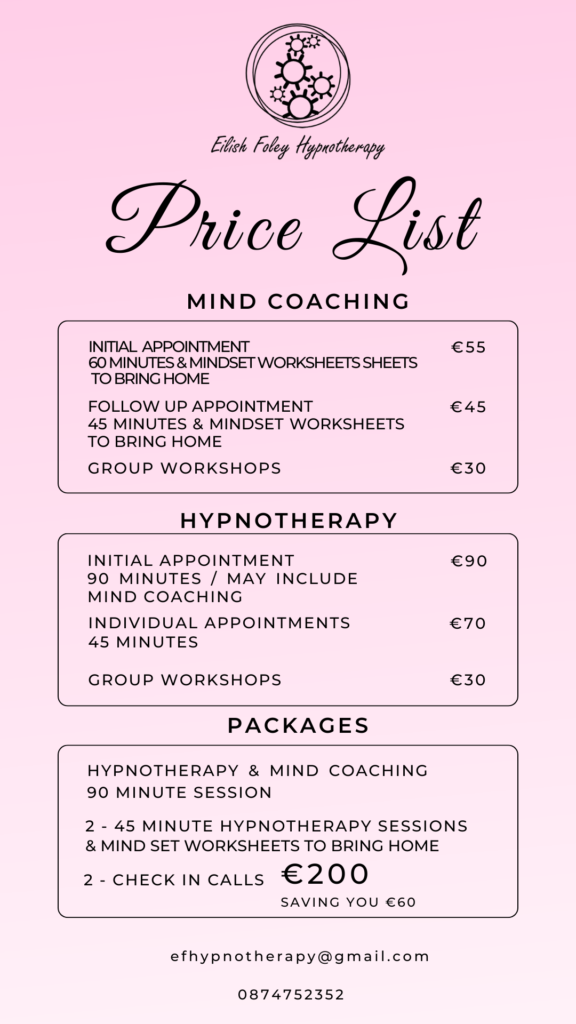
Price List
Most Popular Questions
Frequently Asked Questions
Hypnotherapy is a therapeutic technique that uses hypnosis to help individuals achieve a heightened state of focus and concentration. In this state, people are more open to suggestions, which can help in addressing various psychological and behavioral issues. It's often used to manage stress, anxiety, pain, and to help with behavioral changes like quitting smoking or losing weight.
Hypnotherapy works by inducing a trance-like state through relaxation and focused attention. In this state, the therapist can offer suggestions that may help change thought patterns or behaviors. The goal is to access the subconscious mind, where deeply rooted issues or habits may reside, and to make positive changes.
Yes, hypnotherapy is generally considered safe when conducted by a trained and certified professional. It's important to choose a reputable therapist and to ensure that you are comfortable with them. Hypnotherapy should not be used as a substitute for medical or psychological treatment but can complement other therapeutic approaches.
No, you will not be under someone's control. Hypnosis is not about giving up control; rather, it's about achieving a state of focused relaxation. You remain aware of your surroundings and in control of your actions throughout the process. The therapist cannot make you do anything against your will.
Hypnotherapy can be used to address a variety of issues, including but not limited to:
- Stress and anxiety
- Chronic pain management
- Smoking cessation
- Weight loss
- Insomnia
- Phobias and fears
- Improving self-esteem and confidence
I offer free discovery calls where we can have a chat and do a brief consultation. I can answer any questions you have, then we can decide if you would like to move forward and try hypnotherapy. At your first appointment we will complete an in-depth consultation. Which will allow us to get right down to the root of your problems and design a personalised. Targeted Hypnotherapy Plan for You.
The number of sessions needed varies depending on the individual and the issue being addressed. Some people may see improvement after just one or two sessions, while others may need more. Your therapist will work with you to determine a treatment plan that suits your needs.
During a hypnotherapy session, you can expect to start with a discussion about your goals and any concerns you may have. The therapist will then guide you into a relaxed state, often using verbal suggestions and techniques to help you enter a trance. While in this state, you'll focus on specific issues or goals. After the session, you'll gradually return to your normal state of awareness and discuss the experience with your therapist.
Most people can be hypnotized to some degree, but susceptibility can vary. Factors such as willingness to participate, the ability to focus and concentrate, and openness to the process play a role. Hypnosis might not be effective for everyone, but many people find it a useful tool for achieving personal change.
If you find that you are not responsive to hypnosis, it does not mean that you can't benefit from other forms of therapy. Your therapist might use alternative techniques or methods to address your concerns. It's important to communicate openly with your therapist about your experiences and concerns.
To find a qualified hypnotherapist, look for professionals who are certified by recognized hypnotherapy organizations and have appropriate training and experience. You can also check reviews and ask for recommendations from trusted sources. It's important to ensure that the therapist is reputable and that you feel comfortable with them.
Group hypnotherapy can be a valuable option for many people, offering benefits such as cost savings, support, and motivation. However, it may not be suitable for everyone or for all issues. If you're considering group hypnotherapy, it's a good idea to discuss your goals and concerns with the hypnotherapist to determine if this approach aligns with your needs.
When Group Hypnotherapy Can Be Effective
- Stress Reduction: Group hypnotherapy can be particularly effective for stress reduction, relaxation, and general wellness practices.
- Behavioural Changes: It can also be useful for common behavioural changes such as smoking cessation or weight management, where the shared experience and support of others can be motivating.
The goal of SFH is to help individuals achieve positive change by focusing on solutions rather than problems.
Solution-Focused Hypnotherapy (SFH) is a therapeutic approach that integrates solution-focused principles with hypnotherapy techniques to facilitate positive change. It emphasizes identifying and leveraging a client's existing strengths and resources to achieve specific, future-oriented goals rather than delving into past problems. In SFH, hypnosis is used to help clients enter a relaxed, focused state where positive suggestions and strategies are introduced to reinforce desired changes. The therapy is brief and goal-directed, aiming to achieve tangible results by concentrating on solutions and practical steps. This client-centered approach fosters empowerment and builds on successes, making it an effective method for addressing various issues such as stress, anxiety, and behavioral changes.